
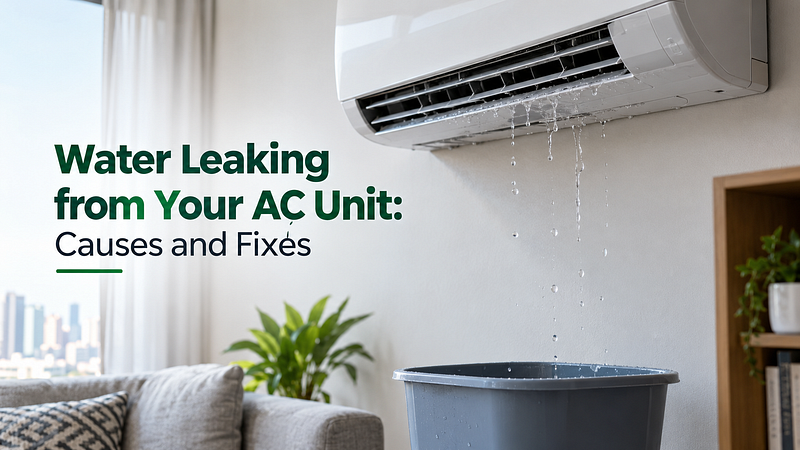
A damp patch on the ceiling or a puddle under the indoor unit is one of the most common AC complaints in Doha, and it rarely stays small. During a Qatar summer, when systems run for most of the day and humidity is high, even a minor fault can send litres of water onto floors, furniture and false ceilings.
This guide explains why it happens, how to tell the causes apart, which checks are safe to try yourself, and when a technician needs to step in.
Where All That Water Comes From
Cooling and dehumidifying go hand in hand. As warm air is pulled across the cold evaporator coil, the moisture in it turns to liquid, much like droplets forming on a chilled glass. That liquid is meant to fall into a tray and then travel along a drain pipe to the outdoors or to a drainage point. Because the air in Doha carries so much moisture, an AC here can collect several litres every hour. If any link in that chain fails, the water has nowhere to go except into your property.
Why Qatar’s Climate Makes Leaks More Likely
Qatar combines long, intense cooling seasons with coastal humidity and fine desert dust. Systems here run harder and for more months than in most places, which means more condensation, faster filter clogging and quicker algae growth inside drain lines. Airborne grit builds up on the coil fins and in the tray, so a drain that is only partly blocked in June can be fully shut by July. A maintenance routine that would be adequate elsewhere often falls short in Doha.
Eight Reasons Your AC Is Leaking
 01
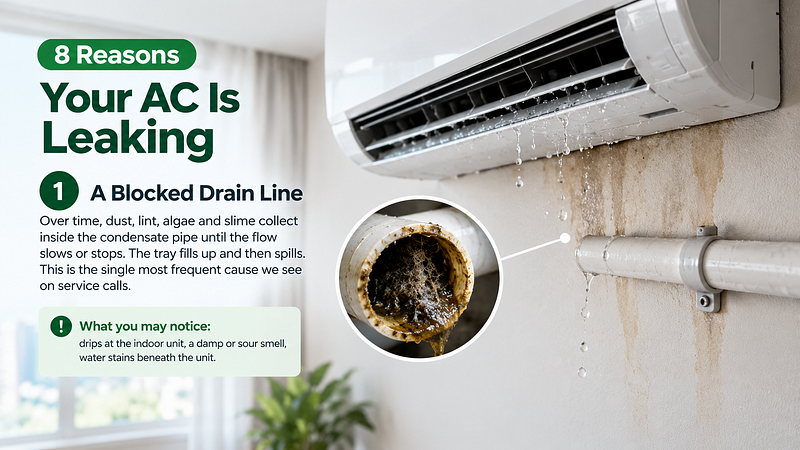
A blocked drain line
Over time, dust, lint, algae and slime collect inside the condensate pipe until the flow slows or stops. The tray fills up and then spills. This is the single most frequent cause we see on service calls.
What you may notice: drips at the indoor unit, a damp or sour smell, water stains beneath the unit.
 02
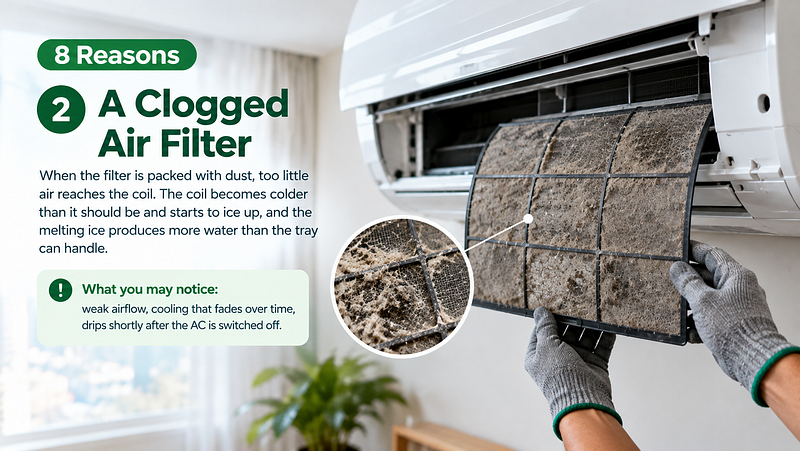
A clogged air filter
When the filter is packed with dust, too little air reaches the coil. The coil becomes colder than it should be and starts to ice up, and the melting ice produces more water than the tray can handle.
What you may notice: weak airflow, cooling that fades over time, drips shortly after the AC is switched off.
 03
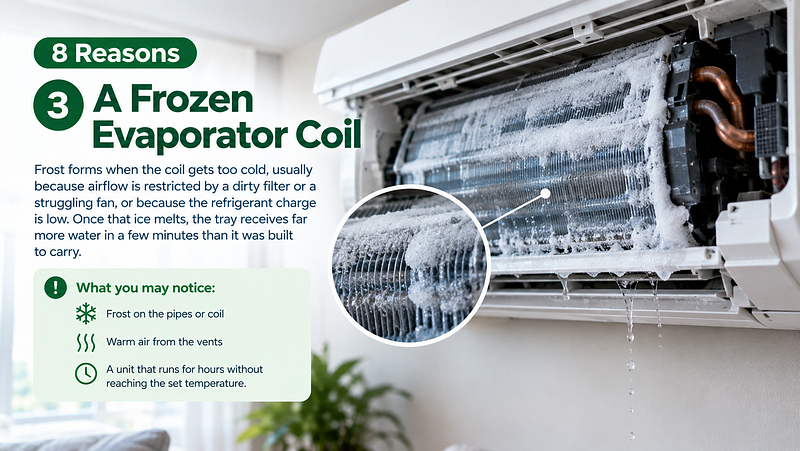
A frozen evaporator coil
Frost forms when the coil gets too cold, usually because airflow is restricted by a dirty filter or a struggling fan, or because the refrigerant charge is low. Once that ice melts, the tray receives far more water in a few minutes than it was built to carry.
What you may notice: frost on the pipes or coil, warm air from the vents, a unit that runs for hours without reaching the set temperature.
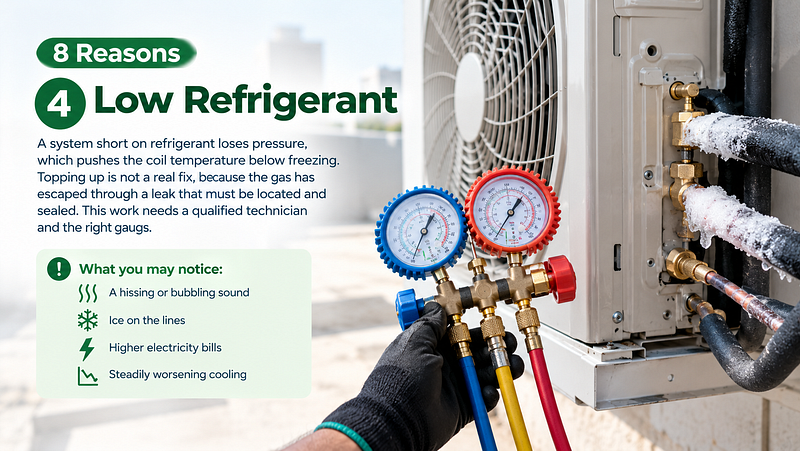 04
Low refrigerant
A system short on refrigerant loses pressure, which pushes the coil temperature below freezing. Topping up is not a real fix, because the gas has escaped through a leak that must be located and sealed. This work needs a qualified technician and the right gauges.
What you may notice: a hissing or bubbling sound, ice on the lines, higher electricity bills, steadily worsening cooling.
 05
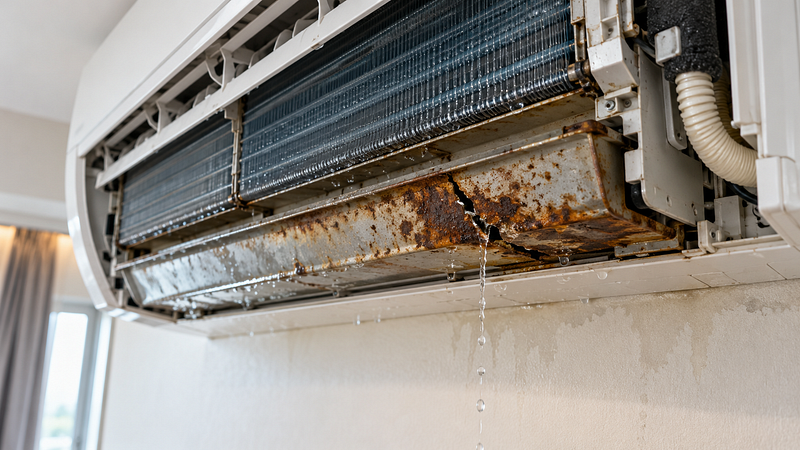
A rusted or cracked drip tray
In older units that have spent years in humid air, the tray can corrode or split. Water then escapes before it ever reaches the drain.
What you may notice: leaks even though the drain pipe is clear, visible rust or flaking metal under the unit.
 06
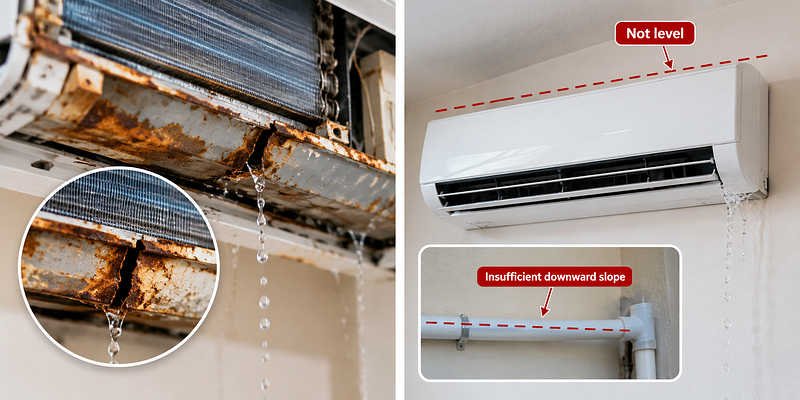
Installation faults
An indoor unit that is not level, or a drain pipe without enough downward slope, makes water pool in the wrong place or run back toward the unit. If the leak began soon after installation or after a unit was moved, this is a likely suspect.
What you may notice: steady dripping from one corner or edge, problems that appeared right after the work was done.
 07
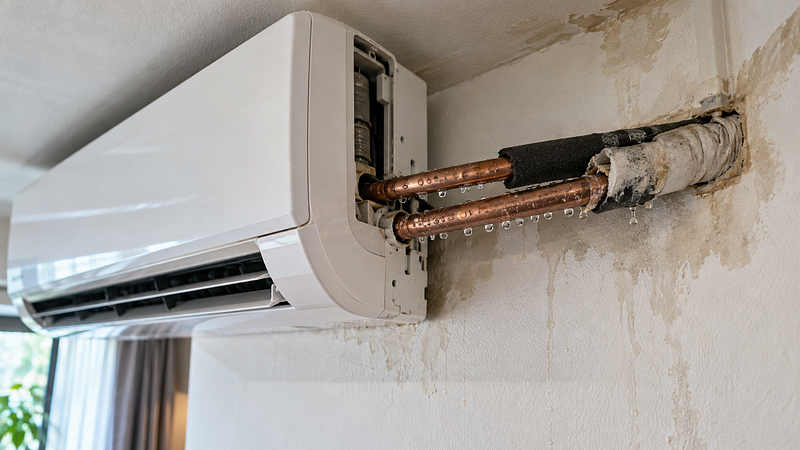
Sweating refrigerant pipes
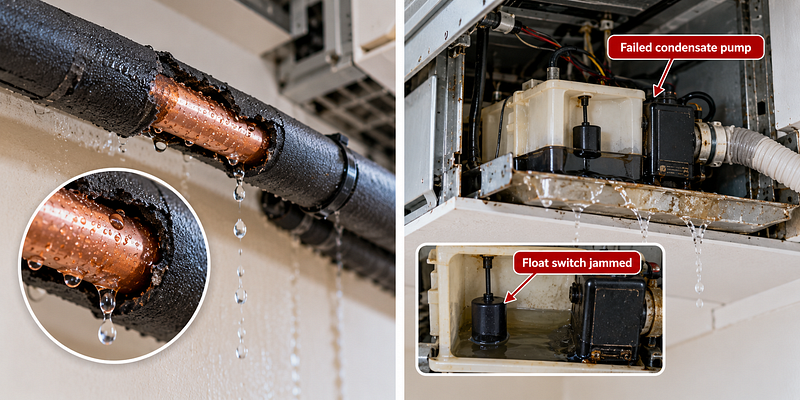
Refrigerant lines run cold. Where the foam insulation has worn away, gone missing or been fitted badly, moisture from the air condenses on the bare copper and drips down. It is easy to mistake this for a leak inside the unit.
What you may notice: water travelling along the pipe run, damp spots on walls or ceilings where the pipework passes.
 08
A failed condensate pump
Where gravity cannot carry the water away, a small pump pushes it out. If the pump breaks or its float switch jams, the reservoir overflows.
What you may notice: no humming from the pump, gurgling sounds, water overflowing even though the drain is clear.
Quick Checks You Can Do Safely
Before you phone anyone, try this short routine:
- Turn the AC off at the thermostat, and at the breaker if water is close to wiring or sockets.
- Take out the filter and clean or replace it.
- Look for ice on the unit or pipes. If you find any, leave the system off for a few hours so it thaws completely.
- Go outside and check whether the end of the drain pipe is dripping freely or is clogged with dirt, insects or pooled water.
- Catch the drips with a towel or a shallow container so floors and furniture stay dry.
- Restart the AC and watch it for a day or two.
If the leak disappears after steps 2 and 3, keep monitoring it. If it comes back, the root cause sits deeper in the system.
Signs It Is Time to Call a Professional
Book a technician if any of these apply:
- The leak returns after you clean the filter
- Ice forms again after thawing
- You hear hissing or suspect a refrigerant leak
- Water has reached ceiling boards, wiring or an electrical panel
- The drain line is blocked and you cannot clear it safely
- The unit is new, relocated or recently installed
Please resist the urge to pour bleach or strong chemicals down the drain, or to remove panels yourself. Water and live electrical parts are a risky combination, and a wrong move can damage the compressor or cancel your warranty.
What Water Damage Really Costs You
An ignored leak is rarely just a nuisance. Water soaks into gypsum ceilings, swells wooden cabinets and doors, lifts paint and corrodes electrical connections. In enclosed rooms it encourages mould, which affects air quality and can trigger allergies and breathing discomfort. Clearing a drain blockage today costs far less than replacing a ceiling and repainting a room next month.
Preventing Leaks Before They Start
- Service on a schedule: one full service before summer and a quick check mid-season catches most problems early.
- Clean filters every one to three months while the AC is in daily use.
- Flush the condensate line during each service to stop algae and dust from building up.
- Check pipe insulation for gaps, particularly above ceilings where damage goes unseen.
- Consider an annual maintenance contract if you manage a villa, office or building, so inspections happen on a calendar instead of after a breakdown.
Repair Help in Qatar
Waiting rarely helps a leaking AC. Servifix Trading & Services handles HVAC maintenance, repairs and emergency call-outs for homes, offices and commercial sites across Qatar, and our team is available around the clock. Find out more about our HVAC services in Qatar, or get in touch:
Email: info@servifix.qa | Website: servifix.qa
FAQ
Is a little dripping outside normal?
Yes. Water leaving through the drain line outdoors shows the AC is dehumidifying properly. Water appearing indoors, from the unit or its pipework, is not normal and needs attention.
Can a leaking AC cause mould?
It can. Constant dampness in ceilings, walls or inside the unit gives mould the conditions it needs, and spores then circulate through the air you breathe.
How much does a leak repair cost in Qatar?
It depends entirely on the cause. Clearing a clogged drain is typically quick and inexpensive, whereas fixing a refrigerant leak or replacing a damaged tray costs more. An on-site inspection gives you a firm quote.
Should I keep the AC on while it leaks?
Not for long. Water that reaches wiring, sockets or the unit’s control board creates a shock and fire risk, so turn the AC off and have it inspected before using it again.
Can I fix a leak myself?
Cleaning filters and checking the drain outlet are fine for most people. Anything involving refrigerant, electrical parts or the unit’s casing should be left to a trained technician.